
Welcome to High Camp
High Camp today shows little trace of the bustling settlement it once was but scratch the surface and you will find a rich and layered history – one shaped by First Nations custodianship, European settlement and generations of families who lived and worked the land.
This oral history of High Camp, particularly the former High Camp Railway Station, records the voices of long-time residents, supported by archival records and historical records.
It seeks to preserve their stories of High Camp before they are lost, capturing not only events but lived experiences – moments of hardship, resilience, humour and community connection.
Through these pages, you are invited to explore the Indigenous History, European settlement, the coming of the railway, how the railway was used and information about High Camp now. You can also explore and wander around the Reserve and artefacts of the railway.
This project was inspired by plans to develop a picnic reserve on the site of the old High Camp Railway Station to remember and honour the rail line’s once vital role throughout the district.
The Friends of the Bendigo–Kilmore Rail Trail (FBKRT) were awarded a $38,252 Tiny Towns Fund grant from Regional Development Victoria (RDV), to support the revitalisation of the neglected site in Crawfords Rd, High Camp.
The site, alongside the existing Flora Reserve, will give local residents a community space to meet and gather and welcome people from other places and it is hoped this history will enable locals and visitors alike to have a deeper understanding and appreciation of this place and its past.
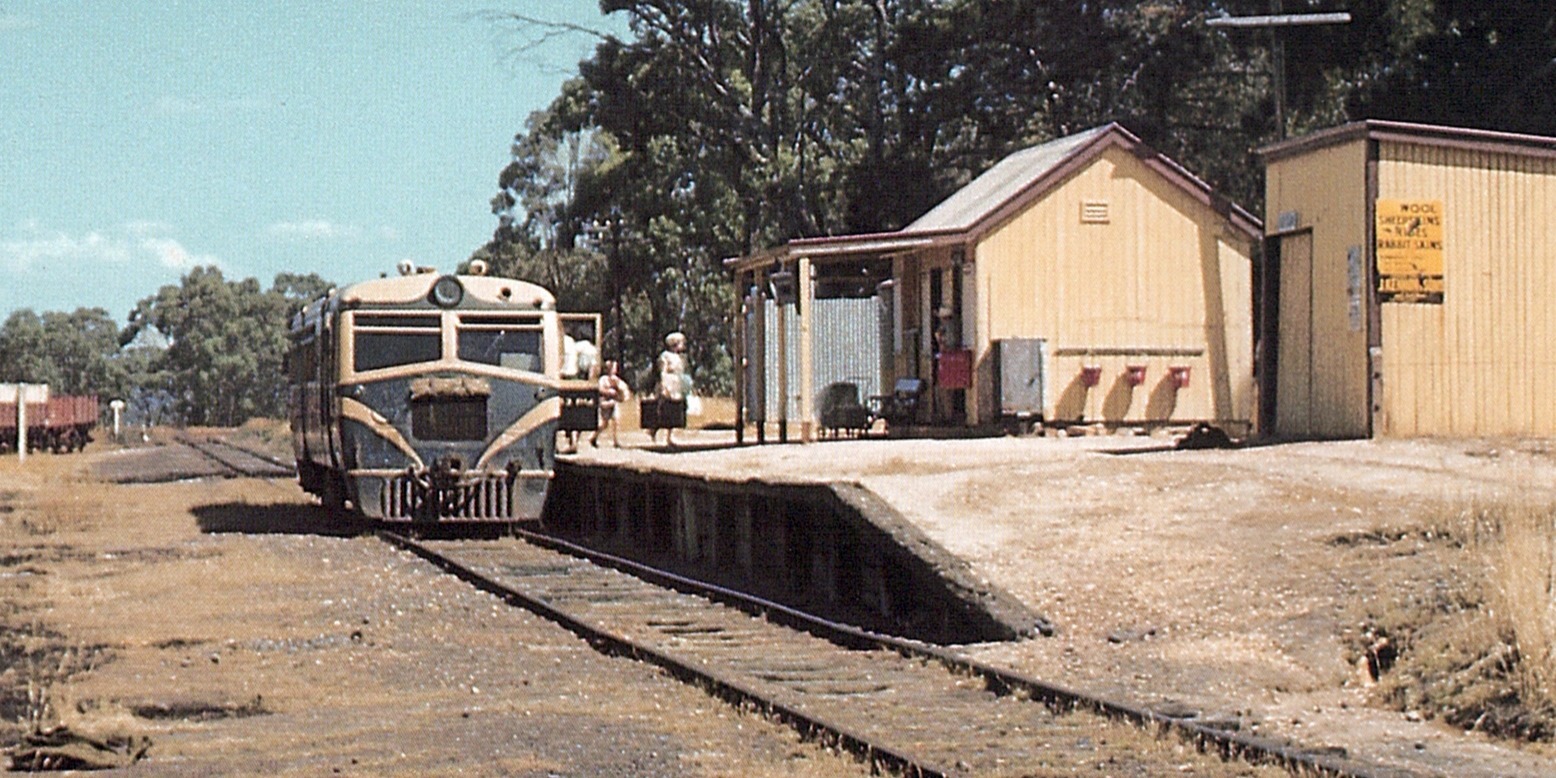
Almost half-way along the Heathcote Branch, a 153 H.P. Walker waits as a lone passenger leaves the train at High Camp on a hot January afternoon, 1961. Photo courtesy of Keith Atkinson.
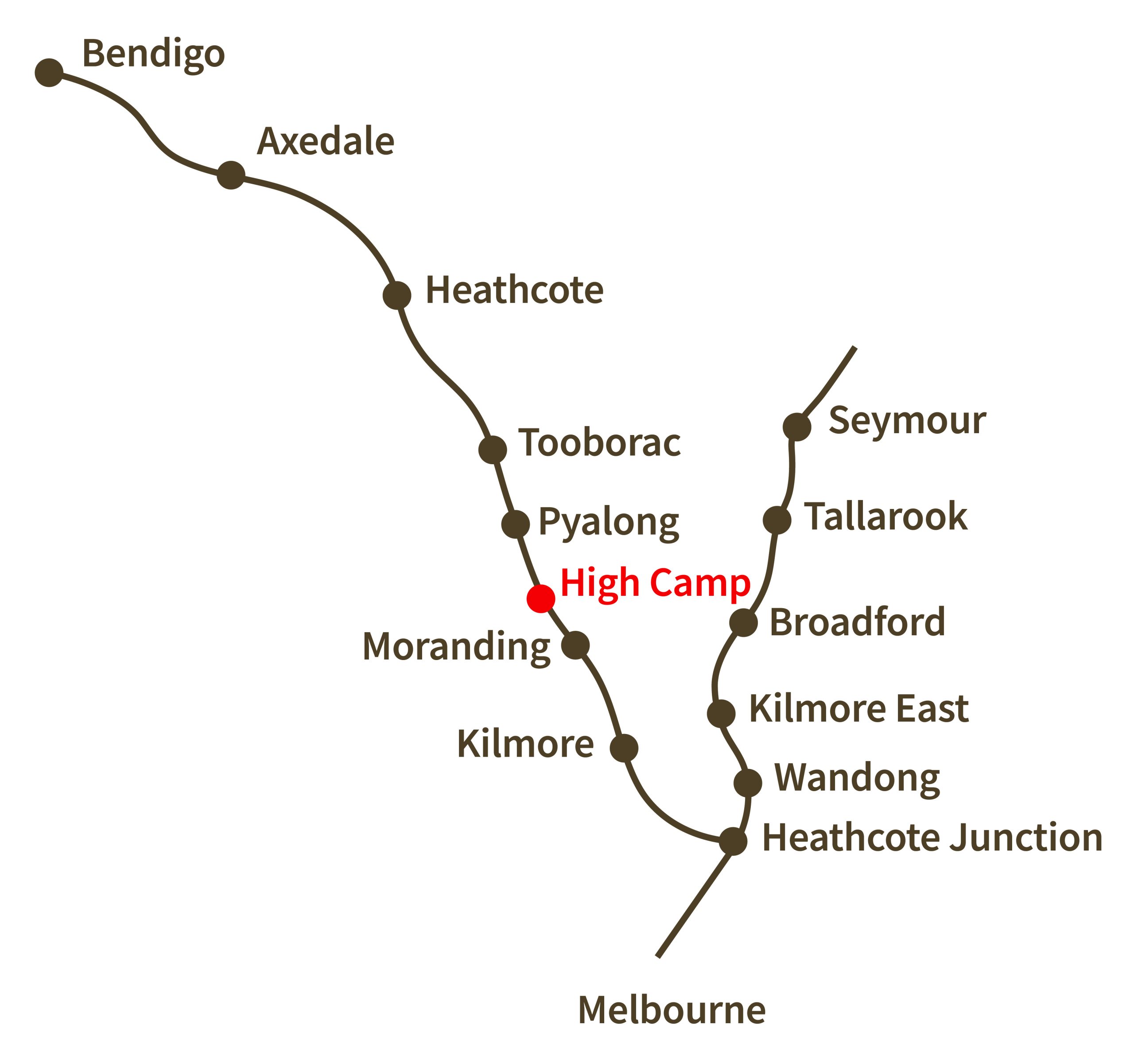
Once, the railway stretched from Heathcote Junction (from Melbourne), through Kilmore, High Camp, then on to Bendigo.